Blog
Should Planning Policy Prioritise Solar That Powers Local Businesses?
A North Wales study explores if planning policy should treat solar powering local businesses differently from schemes built for grid export.
August 2026
Insights
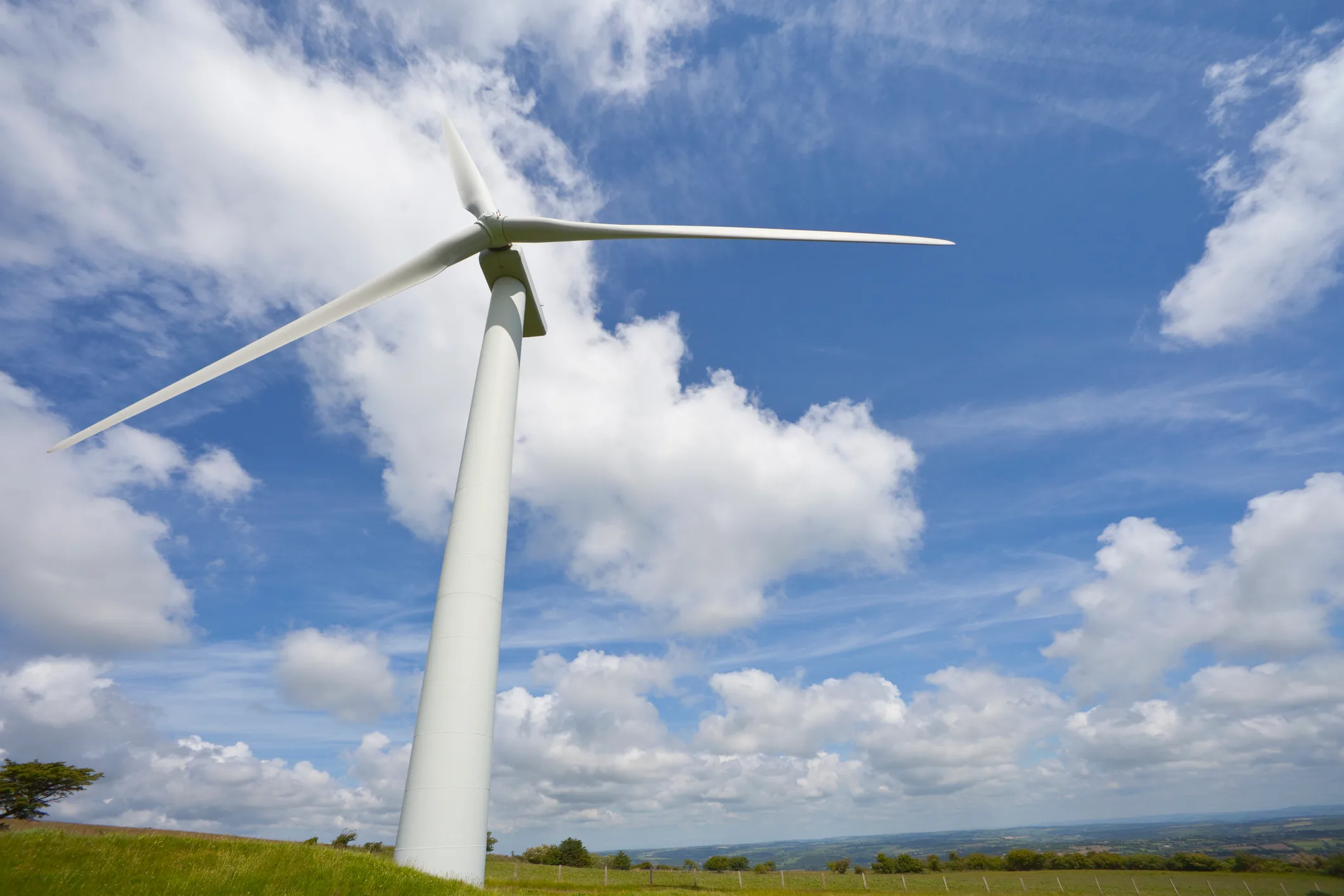

When we think about wind energy, the choice can appear to be between a small farm turbine, and leasing land to a developer for a large energy park. But there is another opportunity which deserves attention: a single, large-scale wind turbine.
Subject to site, planning and grid considerations, a modern or reconditioned turbine potentially measured in megawatts rather than kilowatts could turn a good wind resource into a significant farm diversification enterprise.
There are several ways to participate. Farmers could develop and own a turbine themselves; enter a joint venture with an experienced turbine developer or supplier; or lease the site to an operator in return for rent. Each involves a different balance of investment, risk and reward.
For farms with substantial electricity demand, using power on site can be particularly valuable. Dairy, poultry, controlled-environment agriculture, processing, refrigeration and other energy-intensive enterprises e.g. tourism may all offer opportunities.
The commercial terms matter. Where a wind developer proposes a revenue-based rent based on gross revenue receipts, even a one percentage-point difference can have a substantial effect on the landowner’s return over a 25–40 year project. Additionally, there is also the challenge of defining what is included within the “Gross Revenue Receipts” definition as well as such things as whether rents are to be indexed or not. Understanding the project’s potential revenues before agreeing Heads of Terms is therefore essential. Our experience to date is that the commercial terms on offer at the outset for farmers and landowners are sometimes disproportionately small. Independent advice is key to ensure that farmers are not disadvantaged.
Where electricity demand on the holding is insufficient, there may be scope to identify a nearby large energy user as an off-taker, potentially supplying electricity through an appropriate private-wire or other commercial arrangement. With grid capacity constraining renewable projects in many areas, matching generation with substantial local demand could open opportunities which a conventional grid-export project might struggle to realise.
With Welsh energy policy increasingly supportive of locally generated renewable energy, farmers with suitable land should consider what a single large turbine could do to support their farming enterprise.
Baileys and Partners provide independent advice to farmers and landowners on renewable-energy opportunities, project appraisals, private power purchase agreements, developer negotiations, and joint-venture structures. Please don’t hesitate to contact us if you have been approached by suppliers or wish to be. If articles like this one are of interest, please sign up to the newsletter on our website www.baileysandpartners.co.uk
Insights